


Made a Short Film. Now What? Lessons from Clarissa Jacobson


Written by Valentina Scofano, a fabulous member of SFF’s Fall 2026 Marketing Team. In this piece, Valentina sits down with filmmaker and author Clarissa Jacobson to talk about her book I Made a Short Film Now WTF Do I Do With It?, the wild ride of festivals, promotion, distribution, rejection, burnout, and creative community—and the new partnership that brought Clarissa together with So Fare Films’ emerging creators.
So Fare Films’ new partnership with the author of I Made a Short Film Now WTF Do I Do With It?
In the film industry, bringing a documentary or a short film to life is only half of the battle; one of the hardest parts of filmmaking often begins after the final cut. The adventure begins when you ask the ultimate question: now what the fuck do I do with it?
That exact question is the title of the brilliant guidebook by award-winning filmmaker and writer Clarissa Jacobson, a guide to festivals, distribution, promotion, and surviving the emotional roller coaster of showing the world your work. The book resonated so much with our team that recently, our interns had the incredible opportunity to dive into the second edition of Clarissa’s book as part of our hands-on education in film marketing and distribution.

But the learning did not stop there—we took our collaboration a step further when Clarissa generously made time to answer our interns’ questions and offer tailored advice on the projects they are currently working on.
To celebrate this exciting partnership, I sat down with Clarissa for a conversation about her book, her award-winning horror comedy Lunch Ladies, and what she has learned from years in the short film industry. Here are the highlights from our talk.
From a Dinner Conversation to Lunch Ladies
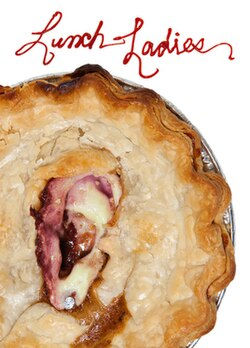
If you have not seen Lunch Ladies yet, you are missing out on a glorious slice of horror comedy. The short follows two middle-aged school lunch ladies who are obsessed with Johnny Depp and take fangirling a little too seriously.

When I asked Clarissa how she dreamed up such a peculiar concept, she shared that it all started with her good friend, and lead actress of the short, Donna, turning 50. She was lamenting how few roles exist for women in their late 40s and 50s—where they are usually “the weird little ladies.” Donna wished for someone to write a film for two women in their prime. At the time, Donna was also performing in Sweeney Todd in a local theater.
“I thought, oh gosh, that would be such a cool thing to do—a spoof on Sweeney Todd with two middle-aged lunch ladies,” Clarissa recalled.
Her teacher’s verdict was that it would either be awesome or horrible. What started as a feature-length script that took a year and a half to write eventually morphed into a short film. Clarissa noted that writing a short is often harder than writing a feature because every single second has to earn its keep, forcing her to compress an 85-to-100-page script down to a tight narrative punch. As for why Johnny Depp became the object of affection between the characters, Clarissa laughed:
“They’re lunch ladies, they probably don’t see Stephen Sondheim. What if they’re these insane fangirls... and they get the idea from him?”
She began to save money to produce a short. One morning, after meditating, she knew it had to be Lunch Ladies, even though she had never thought of herself as a horror person. Since then, it has become a festival favorite.
Handling Rejection and Industry Bullies (and the Occasional Mean Review)
The independent film world is not all glamour, red carpets, and trophies. Chapter 9 of Clarissa’s book tackles “jerk filmmakers” and unsolicited negative feedback, prompting me to ask her about the worst encounter she has ever had.
She recalled a particularly mean-spirited review from a younger festival reviewer that was even posted directly to her IMDb page. Clarissa handled it with trademark resilience: she kindly asked for it to be removed, and when it was not, she took it down herself. Her takeaway is that you cannot control what is said about your film, but you can choose how to respond.
Her advice is to remember that rejection is rarely personal and that filmmakers should view the entire run as a journey. She was shocked when Lunch Ladies did not get into Boston Underground, a John Waters-style cult film festival in Belgium, or Sitges in Spain. Yet it was accepted at Bucheon International Fantastic Film Festival in South Korea, where many of those same films were not.
“You just never know.”
“You have to mentally file it, move on, move on... Lean into the wins,” she advised. Everyone gets rejected, and the yes does eventually come.
Surviving Distribution, Budgeting, and Monetization
For filmmakers who have spent everything on production and post-production, Clarissa has practical advice. Feature filmmakers are often told to reserve 30 to 35 percent of their budget for marketing and distribution, and she spent about 10 percent on her short. She advises setting aside at least $500:
$200 for postcards, posters, and business cards
$300 for festival submissions, focusing mostly on European festivals, which tend to be cheaper
She also cautions against spending limited funds on the biggest festivals because they are closer to a lottery.
The distribution landscape changes constantly, and Clarissa offers grounded advice for navigating these channels. She suggests getting a sales representative if you can, since they have contacts you do not. She highlights platforms like FilmHub, which handle distribution and payments for you in exchange for a percentage. She also recommends asking other filmmakers whose films are already distributed, because they know who is reliable.
Pitching Yourself: Be a Person First
One of the most valuable takeaways from our chat was Clarissa’s advice on pitching yourself to producers, agents, and casting directors. The biggest mistake directors make is launching into their credentials or a plot summary—approaching people like walking wallets.
“They’re refreshed when you don’t treat them that way... Just think about it as if you were meeting a new friend, and then eventually they’ll be like, ‘Oh, what do you do?’ And you’re like, ‘Oh, I’m a filmmaker.’”
When you talk about your project, focus on the human core and characters rather than reciting a dry, mechanical plot of “this happens, and then this happens, and then this happens.”
Burnout & Creative Balance
Living and breathing a short film for an 18-month festival and distribution cycle can lead to severe burnout. Clarissa admitted that constantly posting on social media, writing blogs, and promoting every screening is an exhausting full-time job, but the outcomes are rewarding.
To prevent burnout, she highlighted the importance of creative partnerships. Clarissa admits she leans toward being a fast-moving “monk” who gets anxious if a task is not crossed off her to-do list. Her creative partner Shayna acts as a vital counterbalance.
“She moves way slower than me... Sometimes I respond to emails too fast when I’m upset. So it’s good to have that person to slow you down,” Clarissa reflected.
Clarissa Goes Off Script: The Final Questions
Which of her own “10 Commandments” does she break most? Number 8, tempering our temptations! FOMO sends her to festivals with sky-high expectations, and sometimes she gets disappointed because of her own attitude rather than the festival itself.
For our closing round, I asked her: if her book became a movie, what would the opening scene be? Clarissa said the opening scene would be her crying in her car. The original director did not like the idea of Lunch Ladies and had strung her along for a year. She did end up meeting another director who read the script and said horror fans would love it.
Her lesson: when someone tells you that you cannot do something, get out of the way of what the universe is trying to give you.
“He did me a solid.”
Market the Idea, Not Only the Film
One of the most practical lessons from our session was how much the right audience matters more than a big one. Rather than chasing every influencer or account, we learned to look for the influencers and communities that genuinely care about what a project stands for.

For Minding Shadows, that might mean creating content around forgiveness, resilience, mindfulness, and healing rather than constantly promoting the documentary itself. For IKHAYA, it means identifying the right influencers and communities rather than trying to build an audience from nothing.
Clarissa’s own career shows how well this works. Roughly half of Lunch Ladies’ festival acceptances came from horror festivals, a community she says embraced the film warmly. And when a fan of the film made fan art, it grew into custom T-shirts and a 40-page coloring book.
The most important part is to find the people who already care about what your project is saying. Keep careful track of your outreach, follow up, and do not give up after the first unanswered email.
Our Biggest Takeaway: Think Bigger
One of the biggest takeaways from our conversation was remarkably simple: THINK BIGGER.

Reading a book is one thing. Sitting down with its author and asking, “How would this work for our project?” is another. At So Fare Films, we are used to approaching our projects with realistic, modest goals—finding the right festivals, reaching educators, building small audiences, and getting our films into the hands of people who will value them.
During our consulting session, Clarissa pushed us to imagine a wider field of possibilities. Why couldn’t a beauty brand like Dove want to champion Body Stories? Why couldn’t a wellness organization, cultural institution, podcast, creator, or company become a partner rather than merely an audience member?
Festival submissions and social posts are only the starting point. Clarissa pushed us to look at the whole ecosystem around a film. She sat down with our Indie Projects Team and workshopped real marketing challenges across Body Stories, Minding Shadows, IKHAYA, Religion Stories, Mind Your Shadows, and our film-blog work. With the right partners, a project can reach audiences and open doors—the conversation expanded our horizons!
A Partnership Rooted in Community
What stood out most during our conversation—and throughout our collaboration with Clarissa—is her deep-rooted belief in lifting up other creators. She embodies the collaborative, generous spirit that indie filmmaking desperately needs.
When I asked Clarissa about the best thing that ever came back to her for being generous to another filmmaker, she had trouble picking just one. She said,
“There’s so many!"
She spoke especially warmly about the horror-film community, which she has found unusually generous and supportive. Other filmmakers have helped her find screenings, recommended festivals, represented her when she could not attend, and even brought an award home for her. It is a lesson that runs through her whole story.
Lunch Ladies exists because Donna shared a frustration, because Shayna gave her tough love when she needed it, and because a community of filmmakers kept showing up for each other. Generosity is not a side note to Clarissa’s career; it is woven through it.

Her experience is a reminder that building a career in independent film is not only about promoting your own work. It is also about showing up for other people’s work, sharing opportunities, exchanging knowledge, and creating the kind of community you want to belong to.
We are immensely grateful to Clarissa for sharing her wisdom, coaching our interns as they develop marketing strategies for their projects, and trusting So Fare Films to help share her incredible book with more filmmakers.
That spirit is also what made this collaboration with So Fare Films feel so natural: filmmakers and women in film sharing what they have learned and helping the next person move forward.
This partnership is, at heart, from women to women. At So Fare Films, we believe that this kind of exchange is how our film industry gets better.

About the Author
Valentina Scofano is a Business Administration and Marketing student at John Cabot University, with academic interests that bridge media, marketing, and management. With a background in event planning, content creation, and design, she brings a thoughtful, interdisciplinary lens to her work with So Fare Films. As a member of the Emerging Creators Network, she supports documentary and educational initiatives, helping to shape stories that connect with audiences in thoughtful, accessible ways.


Comments