


Beyond the Screen: So Fare Films at Religion Today Film Festival 2026


Written by Ximena Coster, a talented member of SFF’s creative content, design, communications, and writing teams since Fall 2025. In this piece, Ximena takes us behind the scenes of So Fare Films’ trip to the 2026 Religion Today Film Festival in Trento, where our team experienced filmmaking beyond the screen—and watched Animananda meet its audience for the first time.
So Fare Films on the road...
This September, the So Fare Films team traveled from Rome to Trento for the 2026 Religion Today Film Festival. Over several days, team members were able to attend screenings, Q&As, workshops, cultural events, and social gatherings while meeting filmmakers, actors, festival organizers, and audiences from different backgrounds.

For the So Fare Films interns, Nathan Flores, Oleksandra “Sasha” Kozlova, Matrena Uvarova, and Catalina Perez Fernandez, the trip was also an opportunity to experience what happens around a film once it leaves the hands of its creators and enters a festival setting.
That became particularly meaningful when Animananda, a So Fare Films documentary, premiered at the festival.
Religion Today Film Festival
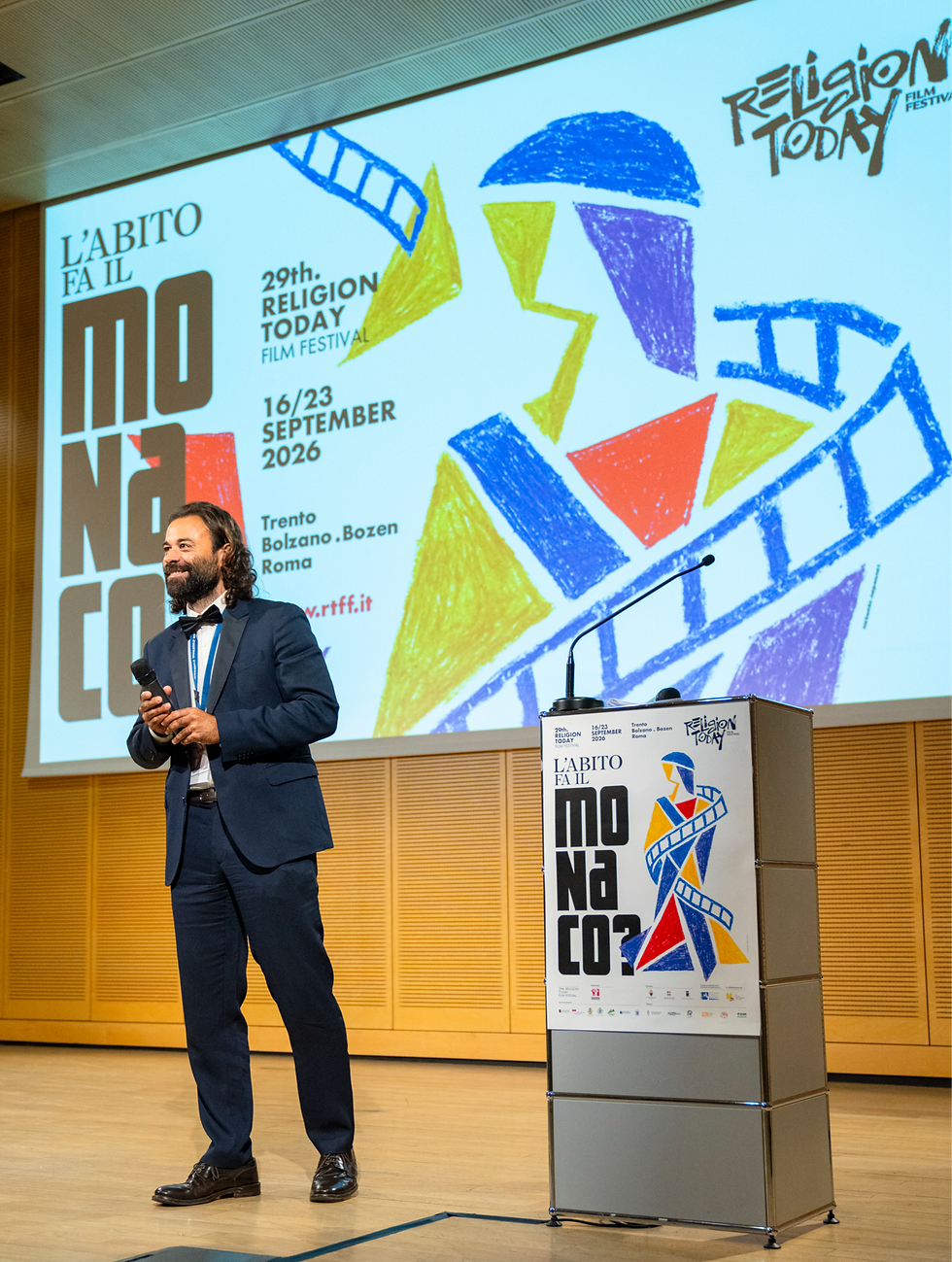
Held in the northern Italian city of Trento, the Religion Today Film Festival aimed to bring together cinema, religion, culture, and questions of identity and human experience. Alongside its film screenings, the festival organized educational activities and events designed to encourage discussion between audiences, filmmakers, and the wider community.
For festival director Andrea Morghen, that educational role has been central to Religion Today for years. Andrea first became involved with the festival as a volunteer in 2009, while writing his thesis on interreligious dialogue and concrete experiences of dialogue in Trentino-Alto Adige.
His interest in the festival came from a broader curiosity about the role religion can play in responding to contemporary challenges. Today, he sees Religion Today as an important space for younger generations.

“We need to prepare them for an increasingly interconnected and multicultural world,” Andrea explained, “where differences should be understood as a source of richness rather than as walls between people.”
That idea was visible throughout the festival, particularly in the range of perspectives presented through the films. For Catalina, one of the most valuable aspects was seeing how differently people can express religion.
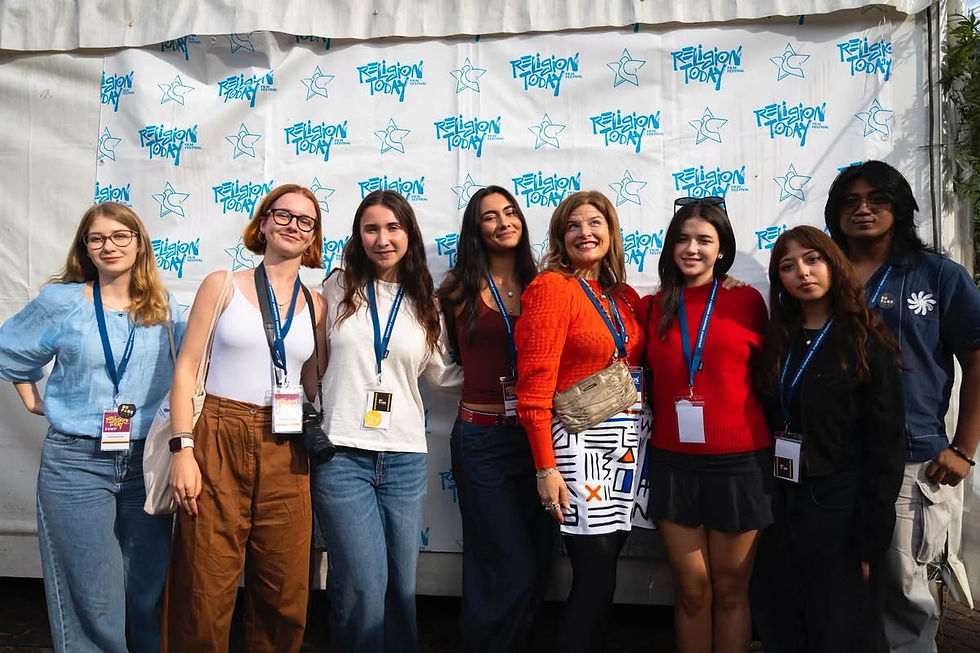
The festival's location also contributed to this exchange. Trento is a relatively small city, but the festival brought together filmmakers and visitors from different parts of the world. Catalina felt that hosting an international cultural event allowed Trento to become better known while highlighting its commitment to diversity and cultural expression.
Sasha also found the city itself contributed to the festival atmosphere. Its size made it feel welcoming and intimate, creating opportunities to meet people and share experiences more easily than might happen at a much larger event.
Beyond the Screen

Although the films were at the center of the festival, some of the most memorable experiences for the So Fare Films team happened around them.

Those conversations were one of the things that made the festival feel different from simply watching a film online. Meeting the people behind the films created opportunities to ask questions, hear about their experiences, and understand the ideas that shaped their work.
The festival also included events outside the traditional screening format. A fashion show, aperitivo, and a silent disco brought a more social atmosphere to the program. Matrena's favorite activity was the fashion show, which she described as “cozy and fun” rather than overly formal, while Nathan particularly enjoyed the aperitivo.
For Andrea, these kinds of events were also part of an effort to make the festival more accessible to younger audiences. This year, Religion Today reached more than 2,000 students through its educational activities, while more than 1,000 people attended screenings and events in cinemas and theaters.

The combination of formal screenings and informal encounters contributed to what Matrena described as feeling “like being part of a big family.” Even though many filmmakers were technically competing against one another, she felt that there was still a strong sense of mutual support.
That sense of community became especially clear during the premiere of Animananda.
Bringing Animananda to Trento

For So Fare Films, one of the defining moments of the festival was seeing Animananda projected in a cinema.
After working on the documentary, watching it as an audience member created a completely different experience.
“I loved watching Animananda being screened as it allowed us to share our work directly with an audience,” Catalina said. “I never imagined to see a project I had worked on in such a setting.”

Sasha had a similar reaction, describing the first moment of seeing the team's work on the big screen as something that “really felt like some kind of magic.”
The audience itself made the screening particularly memorable. Nathan was struck by the fact that the cinema was full and that many of the audience members were young people.
“I loved how we had a full house audience of mostly young people for a film also made by young people,” he said.

For Nathan, the screening showed that a film does not need the most expensive equipment to connect with an audience. What mattered was the “heart and passion” behind the project.
The premiere also brought the So Fare Films team together. Matrena remembered the group cheering when Jenn came onto the stage, with many of the people who had worked on Animananda there to support the film.
For a project that had previously existed largely between the production team and their screens, the premiere marked a shift. The film now had an audience of its own.
Why Film Festivals Still Matter
That experience also raised a broader question: what does a film festival offer that watching a film online cannot?
For Sasha, one answer is visibility. Festivals can be particularly important for smaller filmmakers, giving them an opportunity to “support each other and make their works visible.”

Matrena sees the value in the community surrounding the films. “The cinema world is not just the final product,” she explained. Behind every film are the people who work together to make it, often without knowing exactly where the project will lead.
For her, smaller festivals like Religion Today are “a symbol of love towards the art” and provide a place where filmmakers can meet, share their work, and spend time immersed in cinema.
Nathan focused on the human connection that comes with being physically present.
“There is a different energy when things are in person,” he said.
When a film is watched online, it can be easy to separate the finished product from the people who created it. At a festival, those people are in the room. Audiences can ask them questions, hear their stories, and see their excitement about their work.
The festival therefore becomes more than a way of distributing films. It becomes a meeting point for the people who make, watch, and discuss them.
Looking Beyond the Screen

Religion Today's focus on encounter and dialogue extends beyond its individual screenings. For Andrea, the festival ultimately represents “a place where cinema can create a space for encounter, reflection and dialogue.”
The So Fare Films experience in Trento offered a practical example of that idea.
Over the course of the festival, the team encountered films and perspectives from different cultures, spoke with filmmakers and festival organizers, participated in events outside the cinema, and watched a project they had worked on become part of a larger audience experience.
And what remained most consistent was the opportunity to meet people.
In an industry where films can be created, distributed, and watched almost entirely through digital platforms, Religion Today offered something much harder to reproduce online: a room full of people responding to the same film, conversations that continued after the credits, and filmmakers meeting audiences face-to-face.
For So Fare Films, that made the trip to Trento about more than attending a festival. It was an opportunity to experience cinema as a shared process, especially one that continues long after a film has been finished.

About the Author
Ximena Coster is a Communications student at John Cabot University, with minors in Political Science and Journalism. Her interdisciplinary interests span media, visual communication, politics, and creative storytelling, and she brings experience in communications, content creation, and design to her work with So Fare Films. As a member of the Emerging Creators Network, she contributes to collaborative documentary and educational projects that use visual storytelling to engage with social and cultural issues.
An Invitation to Watch and to Listen
We hope you enjoyed this taste of the So Fare Films educational mission to provide a quality professional formation for emerging storytellers from all backgrounds! Whether you can donate resources or not, we want you to be part of our mission. See below for more info on the "parent" project of Animananda, the docuseries Religion Stories.


Comments